Are your staff members bored with the tedious and lifeless safety training sessions? A large percentage of the organizations are walking through the very same problem of very low participation, poor knowledge retention, and little to no behavior change of employees after traditional training sessions, which are the main culprit for increased number of incident reduction reports and non-compliance. But an interesting and effective solution is also gaining ground which is: gamification. By applying game-based mechanics to safety training, companies like Leadgamp are dramatically improving employee engagement, lowering the incident rates, and creating a stronger workplace safety culture.
This article will probe into how gamification can bring in a qualitative change in the safety training, compliance, and injuries — all the while keeping the learning process fun, meaningful, and measurable.
What Is Gamification in Safety Training?
Gamification refers to the inclusion of game design elements in non-game contexts, for example, in a workplace training program. Contrary to the traditional method of presenting dry slides, gamified safety training uses interactive activities, competition, and rewards to develop employee involvement and better outcomes.
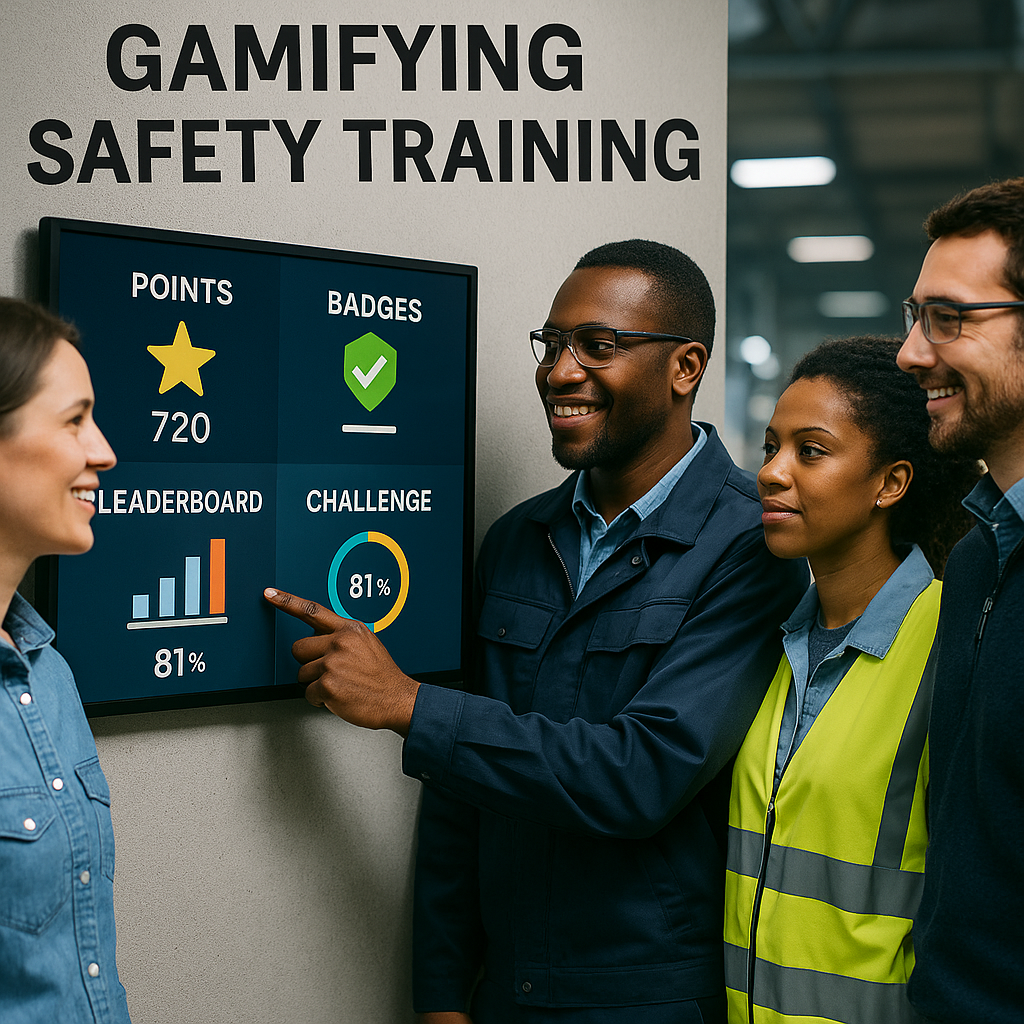
Common Gamification Elements Include:
- Points: Earned by completing safety modules or by answering questions correctly.
- Badges: Won for accomplishments like completing a first aid course or mastering forklift procedures.
- Leaderboards: Create friendly competition by ranking employees or teams based on training performance.
- Challenges: Time-based simulations, for example, emergency evacuations or hazard spotting games.
- Rewards: Tangible (gift cards) or intangible (recognition) motivators to drive participation.
If gamification is employed rightly, it will turn mandated safety training into an exciting and engaging experience — one that promotes employee productivity and leads to a decrease in workplace incidents.
The Benefits of Gamification in Safety Training
Incorporating gamification into workplace safety programs proves strategic efficacy. Companies that adopt this approach typically enjoy maximal improvements.
Enhanced Engagement
Typical training methods are most likely to create distractions, and learners end up disengaged. Gamification pulls the crowd into activity, switching from passive participants to active ones.
- Staff involved in interactive quizzes, games, and simulations are more engaged.
- Employees are more likely to finish their training modules within the time allocated — and enjoy the process.
At Leadgamp, cdl staffing agency reviews which used gamified learning as part of the onboarding process, participation has risen, particularly among younger staff like drivers and warehouse workers.
Enhanced Knowledge Retention
Gamified strategies are incredible tools for staff to help them take in and keep safety information better.
Loops of reinforcement that games bring build memory and bring it back.
Such VR or AR simulations offer experiential learning in a risk-free environment.
When employees remember the health and safety rules, they are the ones who directly affect the drop in incident reduction rates.

Motivation and Performance
Points, challenges, leaderboards, and awards such as congratulations are very strong stimulators.
This kind of program not only encourages employees to take safety lessons more seriously but also to perform better.
Gamification is an essential part of the process that makes the employees happy and learning more satisfying.
The rates of completion and retention in the case of gamified training programs are usually substantially higher.
The Leadgamp’s internal stats confirmed a 34% increase in training module completion after the change to a gamified platform.
Safer Workplaces
The main aim of safety training is to prevent injuries, downtime, and risk. Gamified training conducts:
- Regular safety protocols implementation
- Proper conduct reinforcement through games and challenges
- Imparting of tools to the staff, so they can protect themselves and others
Engaging training causes an alteration of behavior, which brings about lowering of incidents.
Implementing Gamification in Safety Programs: Step-by-Step
Shifting to a gamified method of safety training doesn’t necessarily have to be a tough endeavor.
To begin with, make little changes, develop gradually and always be consistent with compliance needs.
Step 1: Evaluate Your Existing Training
- Look for the modules that displayed very low engagement or those that were related to high incident occurrences.
- Spot the parts that could be more effective if they were the interactive types.
Step 2: Set Goals and Choose Gamification Elements
- Have you made it your priority to increase participation or decrease injuries or both?
- Select elements (points, badges, simulations) that align with these objectives.
Step 3: Create Engaging Content
- Use real-life safety scenarios.
- Integrate quizzes, visual content, and time-bound challenges.
- At Leadgamp, we turned our DOT compliance training into a points system module where drivers identify hazards in simulated real-world conditions.
Step 4: Launch and Track Performance
- Using LMS platforms or cloud-based tools to share content.
- Track completion metrics, quiz scores, and post-training incidents reports.
Step 5: Get Employee Feedback and Optimize
- Get feedback from employees concerning what they found helpful, confusing, or ineffective.
- Regularly update content to maintain training engagement and efficacy.
Gamified safety programs are just like living systems that grow along with your workforce.
A Case in Point: Leadgamp’s Safety Culture Transformation
As a major player in logistics, Leadgamp is posing great emphasis on workplace safety.
We acknowledged that our previously outdated training programs were not working any reduce.
Some of the signs included rushed completion, poor retention, and sky-high compliance risks.
Results of the Gamified Program Direction:
- Increased participation from all departments — from drivers to dispatch
- Lower incident rates by 23% in just a year
- The employees voluntarily revisited course content to enhance their leaderboard positions
- Audit outcomes indicated better protocol compliance and hazard recognition
Our Program Includes Just-in-Case Custom Options:
- Role-based challenges like Warehouse Fire Drill Hero
- Team competitions to win prizes for the biggest score improvement
- Digital dashboards for tracking progress and applauding achievements
- Incentives associated with performance and safety improvements directly
Embedded motivation for safety and compliance is now a part of Leadgamp’s employee development through gamification, which is the proper way to ensure our zero-incident safety goal is achieved.
Tools and Technologies to Support Gamification
The implementation of a gamified safety training program needs tools that support content delivery, tracking, and employee performance.
Choose Platforms With:
- Mobile compatibility
- Analytic dashboards
- Easier content integration
- Scalability for more departments or locations
Leadgamp cooperated with an LMS vendor that gave us the chance to upload our training content and at the same time augment it with interactive modules — no programming needed.

Compliance and Legal Issues
Gamification must comply with OSHA, DOT, and any other regulatory standards. The following areas should be observed:
- Content used must conform to legal safety standards
- Tracking and documentation of completion and comprehension is a must
- Capturing of policy acknowledgment and assessment results is also very important
With proper documentation, gamified training can fully support your compliance obligations.
Final Thoughts: Play to Win at Safety
The process of gamifying your safety training is not just a matter of amusement — it is all about effectiveness.
The more employees are concerned with their own learning, the more things they remember, the better they adhere to the rules, and, finally, the more they contribute to the establishment of a proactive safety culture.
Regardless if it is a manufacturing facility or a trucking company like Leadgamp that you are managing, gamifying your training programs by integration can:
- Enhance employee engagement
- Diminish incident rates
- Encourage long-term behavioral changes
- Contribute to a culture where safety is the priority