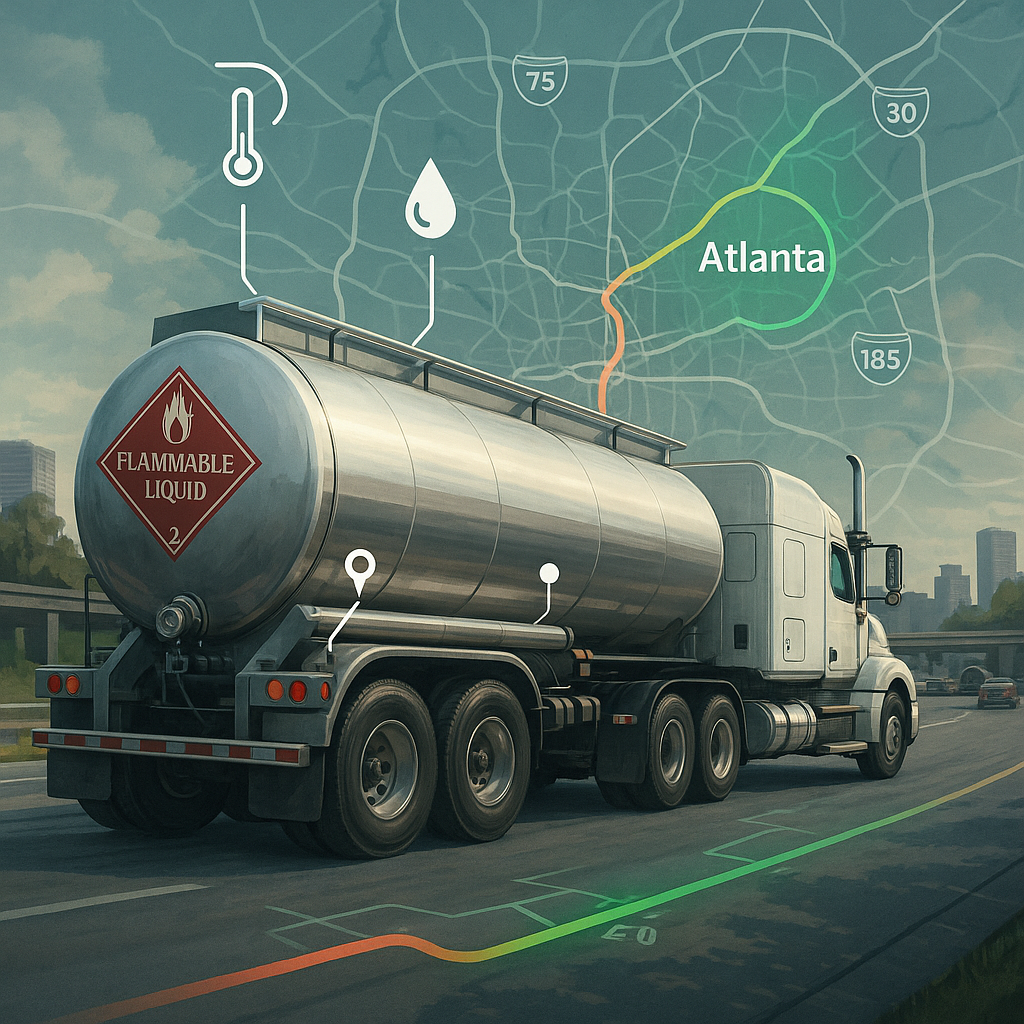
Efficient flammable liquid tracking is cardinal not only for safety, regulatory compliance, but also to determine if the delivery was on time. In the big city of Atlanta metro, where daily challenges like traffic congestion, variable weather conditions, and tight schedules meet like a ballet, it is an uphill task to accomplish good liquid cargo visibility. Thanks to the unique challenges explored in this Atlanta hazmat case study which was celebrated as a success story by one carrier in its turn to implement end-to-end monitoring solution for tanker shipments, the lighting stood out in the safety, control, and transparency realms.
Background and Context
A regional logistics provider with the focus on bringing in the world the safe handling and transportation of dangerous goods continued to be the top choice for shippers and others to work with. The growing usage of flammable liquids — we use them from industrial solvents to ethanol blends — definitely presents the need for continuous monitoring:
- High stakes. A minor leak or spill can entail heavy losses including lives, property, and environmental damage.
- Complex routes. Atlanta is known for its mixture of highways, local roads, and construction zones that can make route risks unpredictable.
- Regulatory scrutiny. The federal and Georgia state governments frequently conduct compliance audits to verify the chain of custody and equipment integrity.
The technology vendor is the carrier’s partner that offers a live tanker tracking solution and features such as sensor data base collection and the analytics dimension. Besides, the company works with well-known transporters — such as HMD Trucking — but in this case, the focus is on the carrier implementing the project itself.
Challenges in the Atlanta Metro

- Traffic congestion. The rush hour congestion was particularly challenging on I-285, I-75, and area surface streets. The traffic delayed transit, which increased the risk by over-pressurized compartments in tankers.
- Variable weather. The fretting stormy weather which can slow down the ´stime´ for shipments or compel reroutes to be made complicated ETA estimation and emergency response plans.
- Urban hazards. Construction sites, changing speed limits, and school zones require strong operation control which is a must to ensure accidents do not happen.
- Snapshot visibility. Conventional proof-of-delivery scans only provide a post-route record, suggesting that they need to generate real time information to mitigate incidents.
These issues underlined the need for monitoring 24/7; simple GPS pings were outdated. The solution would also have to be compatible with existing fleet management systems and should not add too many tasks for drivers.
Solution Components
Tanker Tracking and Sensor Data
- GPS-enabled telematics. Real-time location updates at 30-seconds intervals, the blind spot issue is now a thing of the past.
- On-tank sensors. Sensors for pressure, temperature, and motion were installed in strategic points: dome cover, liquid headspace, and chassis frame.
- Anomaly detection. Cloud-based algorithms flag irregular pressure drops or rapid temperature swings and alerts are routed automatically to dispatchers.
Dashboard Reporting and Event Reconstruction
A single window for central dashboard viewing provided:
- Route visualization. A color‑coded route showing normal transit (green) vs. risk zones (amber/red).
- Performance metrics. Aspects like average transit time, deviation alerts, and sensor health were used as key performance indicators.
- Event reconstruction. A time-stamped replay from GPS and sensor streams identified the basic causes of the incident.
Driver Training and Emergency Drill
- Refresher workshops. All drivers took part in quarterly sessions on hazmat regulations, sensor technology, and the best ways to respond to alarm.
- Live drills. The fire fighting teams cooperated with the carrier in practicing the leaking scenarios and evacuating the buildings. The results of the drills were logged in the dashboard for further analysis.
Compliance Audit Readiness
- Digital logs. Readings from sensors and the routes taken were automatically logged in reports ready for the audit.
- Stormproof chain – of – custody. Every handover of cargo from loading, waypoint delivery to geo-stamps and e-signatures of drivers was documented.
Implementation Timeline
| Phase | Activities | Duration |
| Assessment | Site survey, system design, hardware selection | 2 weeks |
| Installation | Sensor mounting, telematics integration | 1 week |
| Pilot Run | 5 tankers on core routes, data verification | 3 weeks |
| Full Rollout | Fleet-wide deployment, driver workshops | 4 weeks |
| Review & Optimize | Dashboard tuning, algorithm adjustments, drills | Ongoing |
Performance Metrics and Outcomes
The carrier, after the period of six months, has witnessed significant improvements.
| Metric | Before | After | Change |
| On-time delivery rate | 88% | 96% | +8 pp |
| Sensor-triggered anomalies | 14/month | 3/month | -79% |
| Emergency drill response time | 12 minutes | 6 minutes | -50% |
| Compliance audit findings (non‑ops) | 7 minor | 1 minor | -86% |
| Customer satisfaction (visibility) | 3.8/5 | 4.6/5 | +0.8 pts |
Table 2. Key performance metrics illustrating the impact of continuous flammable liquid tracking and proactive training.
Key Learnings and Best Practices
- Early anomaly detection pays off. Tracking down on a small pressure dip that later would have turned into a leak certainly contributed to keeping the road free from traffic.
- Clear dashboards build trust. The use of interactive maps and almost real-time updates on shipments made shippers understand the importance of their contribution to overall liquid cargo visibility.
- Regular drills reduce reaction time. Drivers who practiced the emergency protocols every six month were able to bring down the average reaction time by 50 percent.
- Digital compliance is a game‑changer. Automation of report generation saved countless man hours for audit preparation.
- Driver engagement is crucial. Drivers who were involved in the training and the design of the new system showed higher adoption rates and preferred to report any potential issues.

Deep Dive: Event Reconstruction Example
During one pilot run, a tanker showed a sudden drop in internal pressure while standing in downtown Atlanta. The system:
- Triggered an alert. Telematics flagged a 0.15 psi drop in five minutes.
- Dispatched instructions. The dashboard sent the driver step‑by‑step containment procedures via in‑cab display.
- Replayed the event. The dispatcher replayed the GPS and sensor timeline and identified the unexpected vent valve that was open.
- Corrective action. The driver completed valve maintenance on the spot; lessons were shared in the next compliance audit.
This event reconstruction not only prevented a leak, but it also improved maintenance across the fleet.
Walking Towards Safety with Simulated Crisis Drills
The trucking company worked together with Atlanta’s Hazardous Materials Response Team to carry out a simulated exercise that included a faux gas leak affecting a school zone. Noteworthy achievements comprise:
- Teamwork. Live interactions between the driver, dispatcher, and the first responders reduced the time needed for the setup of the containment by 30%.
- Community knowledge. Noticed appropriate traffic signs as well as the implementation of cordoning protocol facilitated traffic movement during the mock incident.
- Recordkeeping. The drill logs were kept under “Emergency Response” in the dashboard which later made them reference material for future training modules.
Enhancing Driver Training
The positive trend led the carrier to enlarge its driver training program:
- Interactive modules. Simulated route risk scenarios (where a bridge might be weight limited or have low clearance) with the participation of drivers.
- Sensor familiarization. Practical demonstrations & tank sensor panels hands on with the aim of increasing the driver’s skills on anomaly detection.
- Peer reviews. Senior drivers mentored new ones on what to do in unexpected situations, building a culture of shared responsibility.
Future Directions
Encouraged by the findings in Atlanta, the carrier will extend:
- The dashboard reporting upgrades will incorporate predictive weather analytics for rerouting.
- An AI-driven system will propose performance metrics to help identify efficiency gains or areas of safety concern.
- It will also grow the hazmat tracking project in other metro areas through a tailored application of sensor thresholds to meet local regulations.
Conclusion
This Atlanta hazmat case study is a good example of the fact that the total solution approach — a combination of tanker tracking, rich sensor data, persistent driver training, and strict compliance audit readiness — results in measurable safety, and efficiency. By investing in real-time asset visibility and proactive incident management, carriers not only protect their people and the environment but also win the trust of their customers. The use of clear dashboards, regular emergency drills, and thorough event reconstruction together with each flammable liquid shipment moving ahead securely, on time, and full accountability.
In the ever-growing complexity of the logistics field, these principles are the way for any operator who wants to take on flammable liquid tracking and eventually master the art of liquid cargo visibility — in whichever area, be it Atlanta or elsewhere.